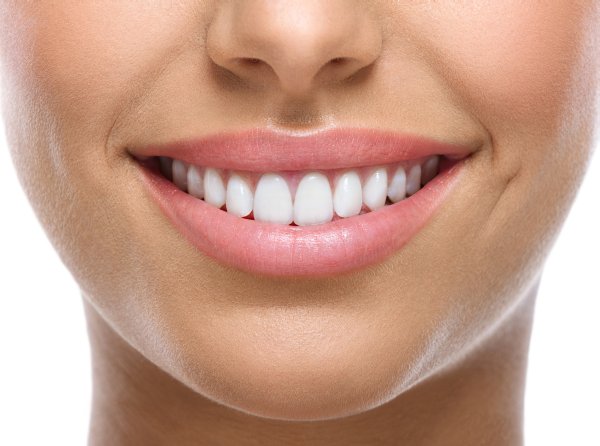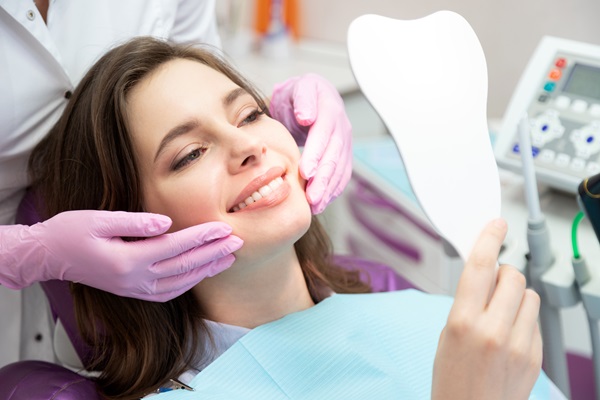
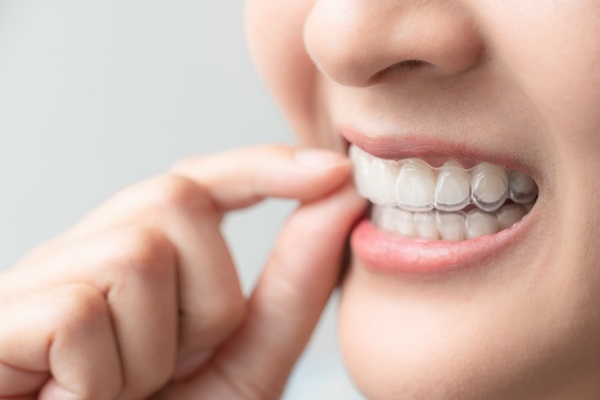
Clear aligners are a discreet way of straightening the teeth. Patients are often excited to have orthodontic work but may find that wearing regular braces is not the right option because of the discomfort. The good news is that issues like gaps, crooked teeth, and bite problems are easy to address with clear aligners. Patients will wear them for 22 hours or more every day, only removing them for cleaning or eating and drinking something other than water. The patient will get a new set of aligners every couple of weeks, and each set moves the teeth a bit more. The teeth will eventually be in the correct position, improving appearance, oral health, and bite function.
An Alternative to Metal Braces
Many times, clear aligners are used instead of metal braces. They can change the way patients look without needing fitted appliances or metal pieces. Clear aligners are often hard to see once in the mouth, making them highly discreet. Plus, they are easy to take out when the patient desires.
What to Expect During Clear Aligner Treatment
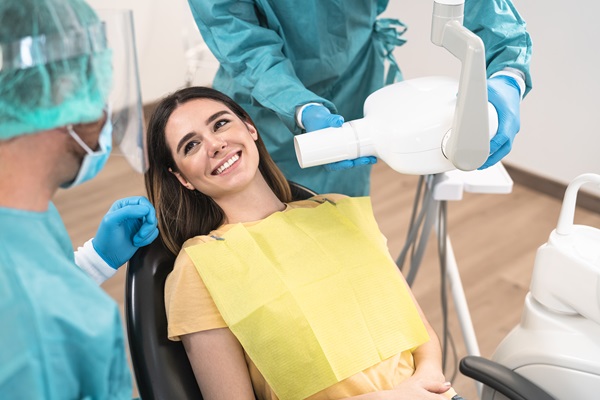
Patients will need to have some measurements taken of their bite and teeth. That often involves using digital imaging, which can take scans of the mouth. These pictures create an image of the patient’s mouth so that the dentist can decide how to move the teeth.
Each new set of aligners will move the teeth a little closer to the right location. The patient can remove the aligners by themselves, giving them more freedom to eat any desired food, and the aligners will not be in the way during cleaning. But it also gives the patients more responsibility. It is crucial to replace the aligners and wear them 22 hours a day or more.
Issues Clear Aligners Can Correct
The patient will visit a dentist offering clear aligners to see if that is the right option. Clear aligners are suitable for a wide range of orthodontic concerns.
Crooked Teeth and Spacing Issues
Clear aligners can straighten crooked teeth to provide a better smile. Patients might also have spacing issues, including gaps between the teeth, meaning there is too much room in the mouth. Food might become stuck in these gaps, leading to gum disease and cleaning issues. Closing those gaps leads to better oral health and a prettier smile.
Crowding
The opposite of gaps is crowding. It might happen because there is not enough space in the patient’s jaw, causing the teeth to twist or overlap. If there is not enough space between the teeth, food could be even harder to remove. That leads to plaque and tartar accumulation, which can cause gum disease.
Overbites
Clear aligners can also correct overbites, which happen when the upper teeth overlap the lower ones. That can cause problems with biting and chewing. The good news is that clear aligners can help the lower and upper teeth fit correctly.
Underbites
An underbite is the opposite of an overbite. It happens when the lower teeth are in front of the upper ones. If there is an underbite, the teeth might begin to wear down too quickly, and that might affect the patient’s speech. The dentist can use clear aligners to move the lower teeth back so that the teeth will sit behind the upper ones correctly.
Open Bites
Open bites are another orthodontic issue, meaning the lower and upper teeth do not meet. This can be caused by tongue thrusting or thumb-sucking. The dentist can use clear aligners to move the lower and upper teeth into the correct location.
Caring for Your Aligners
The patient will need to care for both the aligners and the teeth during treatment. That will require brushing the teeth often. The aligners should get cleaned every time they come out of the mouth. That could involve placing them in a cleaning solution or brushing them with mild soap. The patient will need to brush the teeth before replacing the aligners to avoid trapping plaque and food particles.
Improved Oral Health After Straightening
Crooked teeth affect more than just the patient’s smile. This means that orthodontics is about more than just looking better. Having a better-aligned smile allows a patient’s bite to function well. It also places less stress on the muscles and joints in the face.
The right corrective work is often used for those who have TMJ issues. The reason is that bite function might get compromised because of spacing problems. If the teeth overlap, straightening them is also a good idea. If the teeth are not correctly aligned and overlap, it is hard to clean them. That means patients might be at risk for dental issues like cavities or gum disease, as well as decay.
Are There Any Limitations?
Clear aligners can fix a wide range of issues. However, sometimes the dentist will need to use other methods to help the treatment work well. Highly complex cases might require some additional help. That includes:
- The shape of the teeth, like pegged or round ones
- Tooth position, such as a highly rotated tooth
- Teeth that need to be lowered or raised
- Large gaps
- Previous dental work, such as bridges or crowns in the mouth
Choose the Right Clear Aligners Today
Clear aligners are a great way of getting a better smile. The cost of the treatment will depend on your specific orthodontic issues. The dentist can do an exam and help you decide if you are the right candidate for the procedure. Your dentist is always ready to talk to you about the right way to get straighter teeth. Making an appointment today is your first step.
Request an appointment here: https://www.mysmilecraft.com or call Smile Craft Dental at (650) 880-1550 for an appointment in our Redwood City office.
Check out what others are saying about our dental services on Yelp: Clear Aligners in Redwood City, CA.