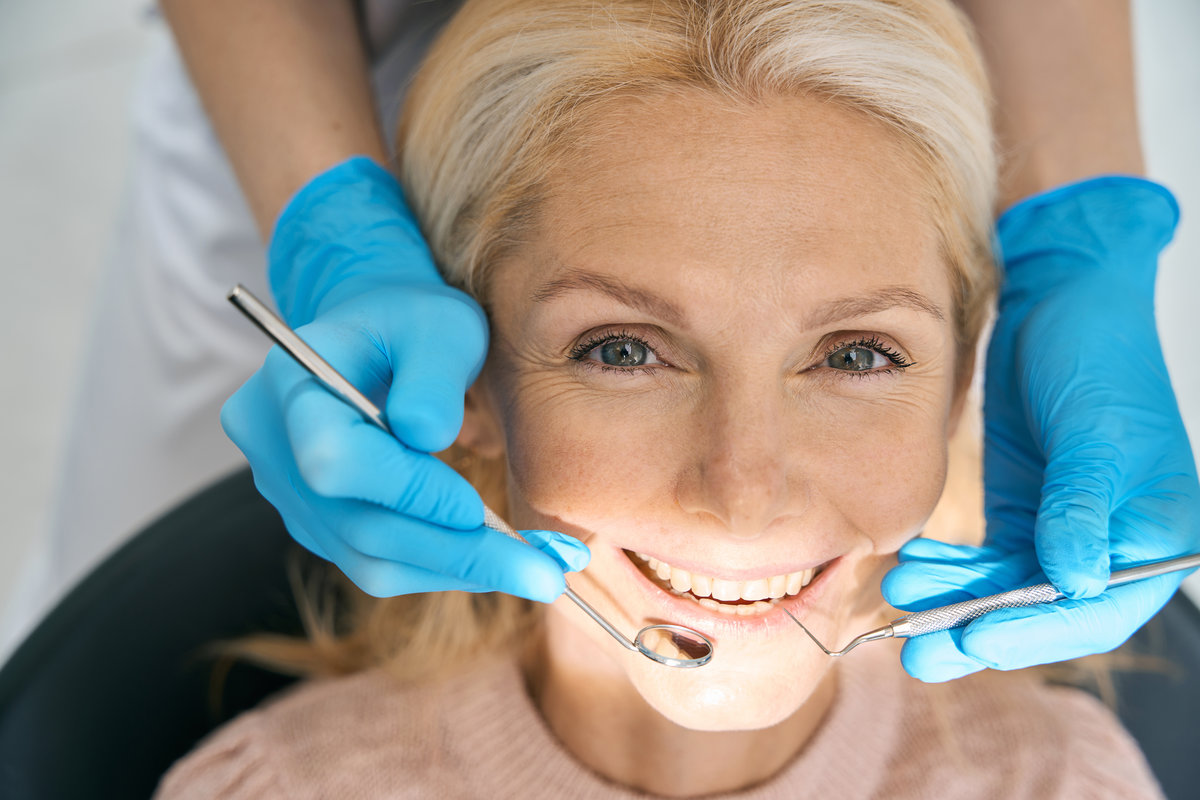
What Does a Periodontist Do?
Periodontists focus on the prevention, diagnosis, and treatment of conditions affecting the gums and the supporting bone structure around the teeth. Think of the gums as the foundation of a house. When the foundation weakens, everything built on top of it becomes unstable, and a periodontist works to strengthen that foundation so your teeth remain secure and healthy for years to come.
At Smile Craft Dental, we provide periodontal services as part of a comprehensive approach to your oral health rather than treating them as a separate concern. Our use of intraoral cameras and digital imaging allows us to see what’s happening beneath the surface with far greater precision than a visual exam alone can offer, giving us a clearer picture of what’s happening and what treatment will work best for you. From routine dental cleanings in Redwood City that help prevent buildup from progressing, to targeted periodontal therapy for patients already showing signs of infection, we coordinate care across every stage.
“A periodontist works to strengthen that foundation so your teeth remain secure and healthy for years to come.”
What Are the
| Advanced gum care from a trusted periodontist — book your evaluation today. | Request an Appointment |
Signs of Gum Disease?
Gum disease rarely announces itself loudly, which is part of what makes it so easy to overlook. Most patients don’t realize how far things have progressed until they come in for an exam and we take a closer look. If any of the following sound familiar, it’s worth scheduling an evaluation sooner rather than later.
Common Warning Signs to Watch For
The symptoms below are worth taking seriously, even if they seem minor on their own:
- Bleeding gums: gums that bleed during brushing or flossing are not normal, even though many people assume they are.
- Persistent bad breath: bacteria trapped beneath the gumline can cause an odor that doesn’t go away with brushing or mouthwash.
- Receding gums: when gums pull away from the teeth, pockets form where bacteria can accumulate and cause further damage.
- Loose or shifting teeth: in more advanced cases, the bone loss that accompanies periodontitis can cause teeth to become unstable.
- Tenderness or swelling: inflamed gum tissue is a direct signal that infection may be present beneath the surface.
Catching gum disease early gives us far more options for treating gum disease in Redwood City before more invasive procedures become necessary.
“Gum disease rarely announces itself loudly, which is part of what makes it so easy to overlook.”
How Do We Treat Periodontal Disease?
Treatment depends on how far the disease has progressed, but our goal in every case is to eliminate infection, reduce inflammation, and help the gums return to a healthy state. We take a conservative approach first, moving to more involved procedures only when the situation calls for it.
Scaling and Root Planing
One of the most effective non-surgical treatments for gum disease is scaling and root planing, also known as a deep cleaning. This procedure removes tartar and bacterial deposits from below the gumline and smooths the tooth root surfaces so that gums can reattach properly. Many patients see significant improvement in gum health after just one round of treatment, especially when it’s paired with improved home care habits.
Ongoing Periodontal Maintenance
For patients who have completed active periodontal treatment, maintaining results over time requires more frequent professional care than the standard twice-a-year cleaning schedule. We typically recommend periodontal maintenance visits every three to four months, during which we measure pocket depths, check for new signs of inflammation, and perform targeted cleaning to keep bacterial levels in check. This ongoing rhythm of care is especially important for patients with dental implants in Redwood City, which depend on healthy surrounding tissue for long-term stability.
Why Choose Smile Craft Dental for Periodontal Care in Redwood City?
Patients choose us because we take gum health seriously without making the experience feel clinical or intimidating. We understand that talking about tooth loss or bone deterioration can be stressful, and we make it a priority to walk every patient through their diagnosis in plain language, at a pace that feels comfortable. Our Spanish-speaking staff ensures that language is never a barrier to getting the care and information you need.
We also invest heavily in continuing education and advanced dental technology, which means the tools and techniques we use reflect current best practices in periodontal treatment. Our Redwood City office accepts most major insurance plans, though we do not accept Delta Dental. For patients without coverage, we’re happy to walk you through our available payment options to make sure cost doesn’t stand in the way of the care you need.
“Gum disease is common, but it is not inevitable, and it does not have to lead to tooth loss.”
Schedule Your Periodontal Consultation at Smile Craft Dental
Gum disease is common, but it is not inevitable, and it does not have to lead to tooth loss when it’s caught and managed with consistent, professional care. From early-stage gingivitis to more advanced periodontitis, we have the tools and the commitment to help you protect the teeth and the smile you have.
If you’ve noticed any signs of gum disease or simply want a thorough evaluation to know where things stand, we invite you to reach out to our team. Contact our office to schedule your consultation today.
Understanding Gum Disease
According to the American Dental Association, gum disease is an infection of the tissues surrounding and supporting the teeth. Gum disease, also known as periodontal disease, is not always accompanied by pain—meaning that patients may not even know that they have it.
Usually, gum disease is caused by a poor oral hygiene routine that allows an excess of plaque (a sticky film of bacteria) to build up on the teeth. When plaque hardens under the gumline into tartar, it becomes more difficult to remove. At this point, the patient will be unable to remove the plaque and tartar without professional dental cleaning.
“Gum disease, also known as periodontal disease or periodontitis, is not always accompanied by pain—meaning that patients may not even know that they have it.”
Preventing Gum Disease
Most cases of gum disease are caused by poor oral hygiene. Unsurprisingly, maintaining a good oral hygiene routine is one of the first lines of defense in protecting oneself against gum disease. Patients should brush their teeth for two minutes at least twice a day and floss at least once a day. Flossing before brushing is imperative, as this allows the patient to clean away any loosened food particles and bacteria. Routine dental visits are also key in preventing gum disease, especially for patients already at risk of developing gum disease. These patients include those who smoke, take certain medications, or suffer from dry mouth. Ideally, patients should have their teeth professionally cleaned every six to 12 months.
“Most cases of gum disease are caused by poor oral hygiene.”
Symptoms of Gum Disease
Gum disease may go unnoticed for some time, especially as it is not always accompanied by pain. Even symptoms in the late stages of gum disease can be very subtle. It is crucial for patients to know the signs of gum disease, so they know how to identify them. Common symptoms of gum disease include but are not limited to:
- Changes in the bite
- Changes in the fit of partial dentures
- Formation of deep pockets between teeth and gums
- Gums that bleed after and during brushing teeth
- Loose or shifting teeth
- Persistent bad breath or taste in the mouth
- Receding gums
- Red, swollen, or tender gums
Patients may still be afflicted by gum disease even without these symptoms. Some people, for instance, may only have gum disease that affects certain teeth. Our team can help identify any dental problems you may have.
“It is crucial for patients to know the signs of gum disease, so they know how to identify them.”
Check out what others are saying about our dental services on Yelp: Gum Disease in Redwood City, CA
Treating Gum Disease
The earlier signs of gum disease are detected, the less invasive treatment procedures are. These may include antibiotics, root planing, and scaling. Antibiotics can help control infection and can be administered either topically or orally. Root scaling and planing are often performed together. While root planing smoothes the root surfaces to remove bacteria and discourage further buildup, root scaling removes tartar and bacteria from the tooth surfaces and beneath the gums.
More advanced gum disease may require more invasive solutions, such as oral surgery. Treatments may involve bone grafting, guided tissue regeneration, pocket reduction surgery (also known as flap surgery), soft tissue grafts, and tissue-stimulating proteins. Bone grafting and guided tissue regeneration may help promote bone regeneration. Pocket reduction surgery may allow for more effective root scaling and planing, while soft tissue grafts may reinforce damaged soft tissue. Finally, tissue-stimulating proteins may help stimulate the growth of healthy bone and tissue.
“The earlier signs of gum disease are detected, the less invasive treatment procedures are.”
Questions Answered on This Page
Q. How can I prevent gum disease?
Q. What are the signs of gum disease?
Q. How can I treat gum disease?
People Also Ask
Q. What can I do about receding gums?
Q. What lifestyle factors can trigger gum bleeding?
Q. What are the benefits of getting a gum contouring procedure?
Q. Am I at high risk for developing oral cancer?
Q. How can someone know what type of dental provider they need?
Gum Disease Statistics
According to the Center for Disease Control and Prevention (CDC), almost half of all American adults suffer from some form of periodontal disease. This number increases with age, with 70% of adults 65 years and older reporting to have the condition. Furthermore, it is more common among men than women. To address such problems, the CDC is working with organizations like the American Academy of Periodontology and the American Dental Association to “improve and sustain surveillance of periodontal disease in the adult U.S. population.”
“According to the Center for Disease Control and Prevention (CDC), almost half of all American adults suffer from some form of periodontal disease.”
| Concerned about your gum health? Request your periodontal consultation today. | Request an Appointment |
Frequently Asked Questions
What are the risk factors for gum disease?
A. Various risk factors may increase your risk of developing gum disease. These include having gingivitis, poor oral health habits, or inadequate nutrition (particularly a vitamin C deficiency). Smoking or chewing tobacco, as well as recreational drug use, may also increase your risk. Certain genetic conditions, medications, pre-existing health problems, and hormonal changes may also put you at heightened risk.
How is gum disease diagnosed?
A. Your dentist may review your medical history to rule out any other causal factors to your symptoms, then examine your mouth to look for any signs of disease. We will then measure the pocket depth of the groove between your gums and teeth. Then take dental X-rays to check for bone loss in any areas where the dentist notices deeper pocket depths.
Is there a link between gum disease and cardiovascular disease?
A. According to Healthline, recent research shows an association between gum disease and cardiovascular disease. A review of several different studies concluded that gum disease increases a patient’s risk of heart disease by approximately 20%. Experts speculate this may be due to inflammation and bacteria in the gums leading to the narrowing of important arteries.
Can children develop gum disease?
A. Gum disease can affect patients of all ages. Children with gum disease usually experience chronic gingivitis, while otherwise healthy young people tend to be afflicted more by aggressive periodontitis. Generalized aggressive periodontitis may also follow puberty due to fluctuating hormone levels.
What is the difference between gingivitis and periodontitis?
A. Gingivitis is a form of gum inflammation that can develop into periodontitis. Our team can work together with patients to help reverse the signs of gingivitis. Periodontitis is another name for gum disease.

Scan here to view this page, Gum Disease, on mobile



Gum Disease Terminology
- Gingivitis
- Gingivitis is the inflammation of gum tissue that results from plaque, other infections in the mouth and poor oral hygiene.
- Periapical Cyst
- A periapical cyst is a pathological cavity, roots of the teeth, that typically has epithelium in the lining and contains fluid or soft matter.
- Periodontal Ligament
- Periodontal ligaments are a group of tissue fibers that help attach the tooth to the alveolar bone, which can sustain damage from gum disease or improper oral hygiene.
- Periodontal Surgery
- Periodontal surgery is the treatment of extreme levels of periodontal disease that can involve multiple techniques to remove the inflamed tissue and infection before it spreads.
Learn More Today
Gum disease may lead to worse oral health problems further along the line. We at Smile Craft Dental may be able to help. Call us today at (650) 880-1550 to schedule an appointment and learn more.
Helpful Related Links
- American Dental Association (ADA). Glossary of Dental Clinical Terms. 2023
- American Academy of Cosmetic Dentistry® (AACD). Home Page.
2023 - WebMD. WebMD’s Oral Care Guide. 2023
About our business, license, and website security
- Smile Craft Dental was established in 2019.
- We accept the following payment methods: American Express, Cash, Check, Discover, MasterCard, and Visa
- We serve patients from the following counties: San Mateo County and Santa Clara County
- We serve patients from the following cities: Redwood City, San Carlos, Atherton, Redwood Shores, Menlo Park, Woodside, Palo Alto, East Palo Alto, Belmont, and San Mateo
- Norton Safe Web. View Details
- Trend Micro Site Safety Center. View Details

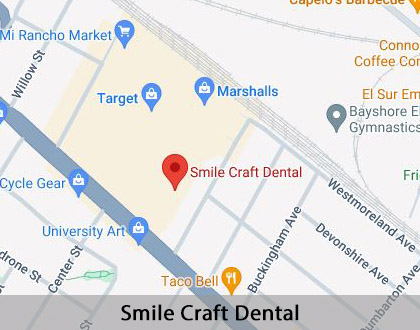
Scan here to open directions to Smile Craft Dental on mobile
Back to top of Gum Disease