The difference between a smile that transforms your confidence and one that falls short of expectations often comes down to what happens before a single aligner is placed. Treatment planning is the backbone of any successful orthodontic outcome, and the technology used to capture your dental anatomy determines just how precise and predictable that plan can be. Today, 3D imaging has become a defining advantage in Invisalign care, giving patients and providers a level of detail that traditional impressions simply cannot match.
At Smile Craft Dental, we take Invisalign in Redwood City seriously, and that commitment starts with investing in the imaging technology that makes great results possible. Our modern, state-of-the-art offices are designed around advanced tools that support accurate diagnosis and personalized treatment, and our team stays current with the latest techniques in digital dentistry so every patient gets a plan built around their actual anatomy, not an approximation of it.
What Does 3D Imaging Capture That Traditional Methods Miss?
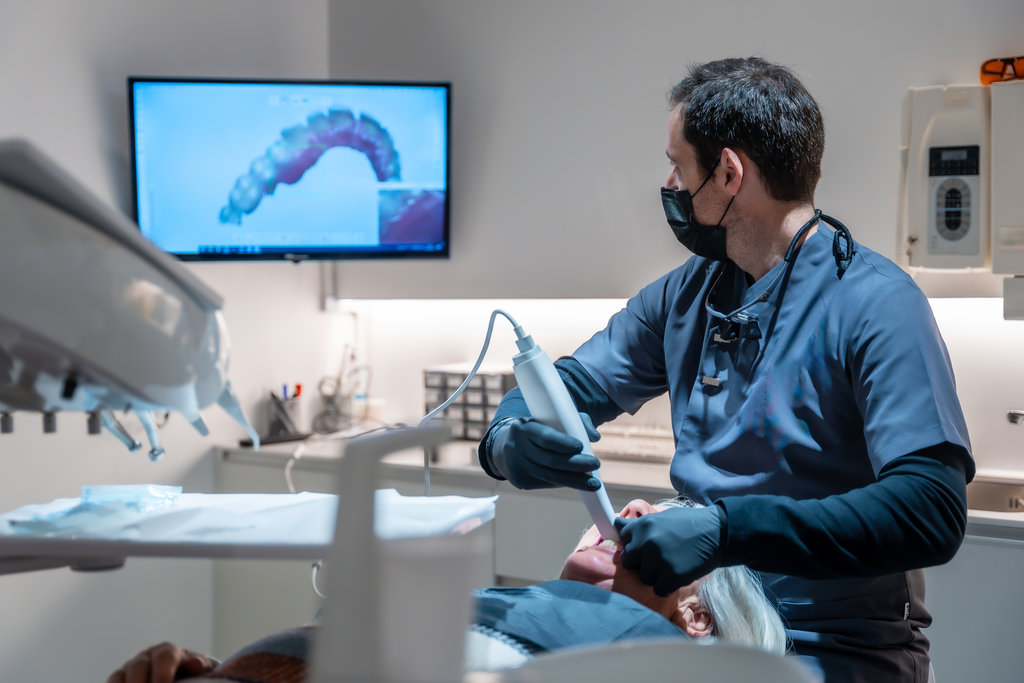
Older impression methods relied on physical molds taken with trays of putty — an uncomfortable process that produced static models and left room for distortion. Three-dimensional digital scanning, by contrast, captures a complete, real-time map of your teeth, gums, and bite in a matter of minutes. Research published in PMC confirms that intraoral scanners have enabled significant advancements in orthodontics, including more accurate diagnosis, treatment planning, and simulation of tooth movement. The result is a digital model your provider can rotate, zoom, and analyze from every angle before any aligners are fabricated.
This level of detail matters because Invisalign treatment depends on precise predictions about how each individual tooth will move over the course of treatment. Small inaccuracies in the initial scan can compound over dozens of aligner stages, making the accuracy of digital capture foundational to a successful outcome.
How 3D Imaging Shapes Your Custom Treatment Plan
Three-dimensional imaging does not just create a picture of your teeth — it builds the entire foundation from which your Invisalign plan is designed. From bite relationships to rotation and spacing, every element of your treatment is informed by what the scan captures.
Mapping Tooth Position and Bite Relationships
When we take a 3D scan, we capture far more than the visible surfaces of your teeth. The digital model shows how your upper and lower arches relate to each other, where crowding or spacing exists, and how your bite closes. This information allows us to build a treatment simulation that accounts for the full complexity of your dental anatomy, rather than relying on flat or partial data.
Visualizing Your Results Before Treatment Begins
One of the most meaningful advantages of 3D imaging is the ability to show patients a simulation of their projected outcome before a single aligner is worn. We can walk through the expected tooth movements stage by stage, setting clear expectations and giving you a genuine picture of where your smile is headed. Patients who can visualize their results are more motivated to stay consistent with their aligner schedule, a factor that directly influences how well treatment goes.
Tracking Progress and Refining the Plan
3D imaging is not only useful at the start of treatment — it plays an ongoing role throughout your Invisalign journey. Periodic scans allow us to compare your actual tooth positions against the projected positions in your treatment plan, so we can make targeted refinements rather than waiting until the end of a series to evaluate results.
We also use intraoral photos alongside digital scans to document changes at each visit, giving us a comprehensive record of your progress that supports better clinical decisions throughout your treatment. Together, these tools allow us to stay closely aligned with your plan and respond quickly if adjustments are needed.
Why Precision Planning Produces Better Results
The connection between accurate imaging and predictable outcomes is direct. When the digital model reflects your anatomy faithfully, the aligner fabrication process starts from a stronger foundation. Attachments — small tooth-colored anchors placed on specific teeth to guide targeted movement — can be planned and positioned with greater precision when the underlying scan is detailed and accurate.
Understanding what to expect during clear aligner treatment is far easier when your provider can show you your plan in detail rather than describe it in the abstract. At Smile Craft Dental, we combine our 3D dental scan technology with a patient-centered approach that prioritizes communication, so you always know where your treatment stands and why each step matters.
Schedule Your Invisalign Consultation at Smile Craft Dental
3D imaging has genuinely changed what is possible in Invisalign treatment, closing the gap between projected outcomes and actual results through greater accuracy, better visualization, and the ability to monitor and adapt throughout care. At Smile Craft Dental, we are proud to offer this technology at both our Redwood City and Sunnyvale offices as part of our ongoing commitment to the highest standard of dental care for every patient we serve.
If you are ready to explore whether Invisalign is right for you, our warm, skilled team would love to walk you through the process from your very first scan. We welcome patients of all ages, accept most major insurance plans, and are committed to making your experience as comfortable and informed as possible. Contact our office online to request your consultation today.
Frequently Asked Questions About 3D Imaging for Invisalign
How accurate is 3D scanning for Invisalign treatment?
3D digital scans capture every contour of your teeth and bite relationship with a level of precision that traditional mold-based impressions cannot consistently achieve. The resulting digital model is used to map exact tooth positions and plan the full sequence of aligner movements from start to finish.
Can I see a preview of my results before starting Invisalign?
Yes. The digital data collected during your 3D scan can be used to generate a simulation showing how your teeth are expected to move through treatment. Before committing to a plan, you can review this preview with our team and explore all your orthodontic treatment options in Redwood City so you feel fully confident in your decision.
Why does Invisalign treatment need 3D scans instead of traditional molds?
Traditional impressions can be uncomfortable and are prone to distortion. 3D intraoral scans produce a complete digital model in minutes, allow for immediate review, and serve as the foundation for precisely fabricated aligners. Patients at our Sunnyvale location can learn more about how Invisalign at our Sunnyvale office incorporates 3D scanning into the treatment process.
How often are 3D scans taken during Invisalign treatment?
An initial scan is taken before treatment begins to design your full aligner series. If refinements are needed partway through treatment, an additional scan may be taken to create updated aligners that fine-tune your results and keep your plan on track.
Does Smile Craft Dental offer 3D scanning at both locations?
Yes. Advanced 3D digital scanning is available at both our Redwood City and Sunnyvale offices, so all Smile Craft Dental patients have access to this technology as part of their Invisalign treatment planning.
The Smile Craft Dental Team
Smile Craft Dental