
Who Can Become an Endodontist
Endodontists are dental specialists who focus on root canal treatment, diagnosing tooth pain, and other procedures involving the tooth’s interior. In addition to completing dental school, endodontists must undergo at least two years of specialist training. This knowledge allows them sometimes to preserve teeth that they would have otherwise lost.
Altogether, that usually means four years of dental school followed by two to three years of endodontic residency. Their advanced training focuses on diagnosing, treating, and preventing diseases of the dental pulp, with heavy emphasis on pain diagnosis, local anesthesia, and tools such as dental operating microscopes and 3D imaging.
“In addition to completing dental school, endodontists must also undergo at least two years of specialist training.”
Endodontists vs. Dentists
Although all endodontists must finish dental school, not all dentists must train in endodontics. Thus, while all endodontists are dentists, very few dentists are endodontists. By focusing their expertise on the tooth’s interior, endodontists are typically more experienced in root canal treatments than dentists.
The American Association of Endodontists reports that endodontists perform an average of 25 root canal treatments a week, while general dentists typically perform fewer than two. Because endodontists spend their days diagnosing and treating tooth pain, they also see many of the difficult-to-diagnose oral and facial pain cases that other dentists refer to them.
“Thus, while all endodontists are dentists, very few dentists are endodontists.”
What Endodontists Do
“Endo” is Greek for “inside,” while “odont” is Greek for “tooth.” As such, endodontic treatments are any treatments that involve the inside of the tooth. The interior of the tooth is also known as the tooth’s pulp. Accordingly, endodontists are specialists in saving teeth. Some standard endodontic services involve root canal treatment and endodontic retreatment.
Root canal treatment is a relatively simple procedure that relieves dental pain and saves the tooth. This treatment is necessary to remove any inflammation or infection in the pulp. If this first procedure fails or the tooth becomes reinfected, then endodontic retreatment is possible. During retreatment, the dentist or endodontist reopens the tooth, removes the old filling material, cleans and reshapes the canals, and seals them again before the tooth is restored.
“… endodontic treatments are any treatments that involve the inside of the tooth (also known as the tooth’s pulp).”
Check out what others are saying about our dental services on Yelp: What is an Endodontist in Redwood City, CA
Severe Endodontic Treatments
Endodontists can also help with more severe issues, such as endodontic surgery, treatment of dental injuries, and care for teeth that did not heal after an earlier root canal. Some endodontists also place dental implants when a tooth cannot be saved, although an implant replaces a tooth rather than preserving it. A tooth saved with endodontic treatment and a proper restoration can often last for many years.
Occasionally, patients may have small fractures or hidden canals that go undetected by X-rays during an initial root canal treatment. Endodontic surgery can locate these fractures or canals, remove any calcium deposits, and treat any damaged surfaces. If all these measures are inadequate, tooth extraction may be necessary. In such cases, a dental implant or a bridge is a common way to replace the tooth, and implants can look and function much like natural teeth.
“A tooth saved with endodontic treatment and a proper restoration can often last for many years.”
General Dentist or Endodontist: Who Treats Your Tooth?
Many root canals are performed by general dentists, particularly on teeth with straightforward canal anatomy. Endodontists tend to see the cases that are harder to predict. A general dentist may suggest seeing an endodontist for situations such as:
- Complex canals: roots that are narrow, sharply curved, calcified, or hard to locate on X-rays.
- Retreatment: a tooth that already had a root canal and is painful or infected again.
- Hard-to-pin-down pain: pain that cannot be traced to one tooth, or a suspected crack.
- Endodontic surgery: procedures such as an apicoectomy, which treats the tip of the root.
- Some dental injuries: for example, a permanent tooth that was knocked out and put back in place.
At Smile Craft Dental, our general dentists provide root canal treatment, pulp capping, and other endodontic care for many patients in Redwood City. Before treatment, your dentist reviews your X-rays and 3D imaging and explains whether your tooth can be treated in our office or whether seeing an endodontist makes sense for your case. Either way, the tooth usually needs a crown or permanent filling afterward, which your general dentist places. If you are dealing with a damaged tooth, our article on whether a cracked tooth can be saved explains how cracks affect these choices.
Questions Answered on This Page
Q. What are the qualifications to become an endodontist?
Q. What is the difference between endodontists and dentists?
Q. What are some standard endodontic services?
Q. Can endodontists help with more severe issues?
Q. When should I see the endodontist?
People Also Ask
Q. Is increased sensitivity to temperature a sign that endodontic surgery is necessary?
Q. What are the benefits of a root canal?
Q. How common are root canals?
Q. What if a crown or root canal cannot save my cracked tooth?
When to See an Endodontist
Many patients make the mistake of fearing the endodontist. In reality, it is critical to address tooth pain as soon as possible. Early intervention maximizes the chances of saving one’s tooth. In many cases, an endodontist can resolve a patient’s tooth pain in one appointment.
Contact a dentist promptly if you have tooth pain, sensitivity to hot or cold that lingers after the food or drink is gone, a tooth that is darkening, or a bump on the gum. Facial swelling, fever, or an injury to the face or teeth needs same-day attention. Delaying treatment can allow an infection to spread and reduce the chance of saving the tooth.
“Early intervention maximizes the chances of saving one’s tooth.”
Frequently Asked Questions
Q. Are root canal treatments painful?
A. It is a common misconception that root canal treatments are painful. Thanks to modern technology and anesthetics, the procedure is typically not much more uncomfortable than a cavity filling. Our team will answer all questions and concerns before treatment to help quell dental anxiety.
Q. Can a root canal treatment treat a cracked tooth?
A. It varies on a case-by-case basis. Typically, root canal treatments are reserved for more severely cracked teeth. Minor cracks may be treated with bonding, a filling, or a crown instead.
Q. My tooth is not bothering me. Do I still need root canal treatment?
A. Not all teeth that require root canal treatment will have noticeable symptoms. Infections can be painless, leading affected individuals to believe that they have gone away. Often, routine radiographs and clinical examinations are the only way to ensure whether an infection is present.
Q. What happens after root canal treatment?
A. If an endodontist treated your tooth, they typically send a copy of your X-rays and a record of your treatment to your general dentist. You will then return to your general dentist, usually within a few weeks, for a crown or permanent filling that protects the tooth. Your dentist can explain which restoration is best for you.
Q. Why is tooth extraction typically the last option?
A. Saving your natural tooth is usually the first choice when it can be done predictably. Studies show that root canal treatment and dental implants both have high long-term success rates, but keeping your own tooth avoids implant surgery, preserves the natural ligament that supports the tooth, and is often less costly over time than removing and replacing it.
Q. Do general dentists perform root canals?
A. Yes. Many root canals are performed by general dentists, particularly on teeth with straightforward canal anatomy. A general dentist may refer you to an endodontist for retreatment, endodontic surgery, unusual or calcified canals, or pain that is hard to diagnose.

Scan here to view this page, What is an Endodontist, on mobile

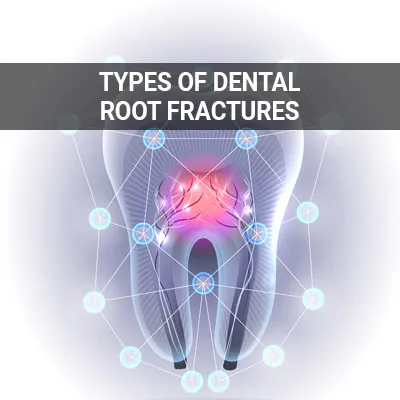

Endodontic Terminology
- Dentin
- Dentin is the inner layer of the tooth structure that is immediately under the enamel and surrounds the dental pulp.
- Enamel
- The enamel is the hard calcified layer that covers the entire tooth and is subject to interaction with multiple substances.
- Pulpectomy
- A pulpectomy is a procedure that involves the complete removal of pulp tissue from the root canal in a tooth.
Call Us Today
Choosing the right care for a painful tooth can feel intimidating. Our team at Smile Craft Dental can help. Contact our team to schedule an appointment or learn more about our services.
Helpful Related Links
- American Dental Association (ADA). Glossary of Dental Clinical Terms. 2023
- American Academy of Cosmetic Dentistry® (AACD). Home Page.
2023 - WebMD. WebMD’s Oral Care Guide. 2023
About our business, license, and website security
- Smile Craft Dental was established in 2019.
- We accept the following payment methods: American Express, Cash, Check, Discover, MasterCard, and Visa
- We serve patients from the following counties: San Mateo County and Santa Clara County
- We serve patients from the following cities: Redwood City, San Carlos, Atherton, Redwood Shores, Menlo Park, Woodside, Palo Alto, East Palo Alto, Belmont, and San Mateo
- Norton Safe Web. View Details
- Trend Micro Site Safety Center. View Details

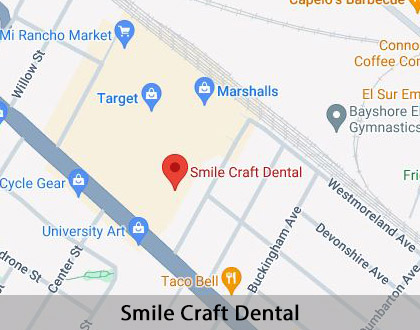
Scan here to open directions to Smile Craft Dental on mobile
Back to top of What is an Endodontist
QR code for What is an Endodontist