
Bleeding gums during brushing might seem like just a minor annoyance, something to shrug off and forget by the time you rinse and spit. However, that small sign is often the first signal of an infection working its way beneath the surface, one that can silently progress from irritated tissue to bone loss if it goes unaddressed. Many patients wait until a tooth feels loose or a dentist points out receding gums at a checkup, and by that point, the disease has often advanced further than they realized.
At Smile Craft Dental, we treat gum disease at every stage, from early gingivitis to more advanced periodontitis, using a graduated approach built around your specific level of gum health. Our team takes the time to explain what we are seeing at each visit and why a particular treatment path makes sense for you, because we believe our patients deserve to understand more than just the outcome.
Request an Appointment
"*" indicates required fields
Same-week appointments available
Gum disease often develops without pain, which is part of what makes it so easy to overlook. Still, there are some subtle yet common warning signs you can watch for:
If you have noticed any of these changes, the sooner you come in, the more treatment options remain on the table. Gingivitis, the earliest stage, is fully reversible with proper care. Once the disease advances to periodontitis, treatment shifts from reversal to management and containment.
According to the Centers for Disease Control and Prevention, nearly half of all adults aged 30 years and older have some form of periodontitis, with severe periodontitis affecting about 8% of adults. Those numbers make gum disease one of the most common conditions we see in our Sunnyvale office, and also one of the most manageable when it is caught early.
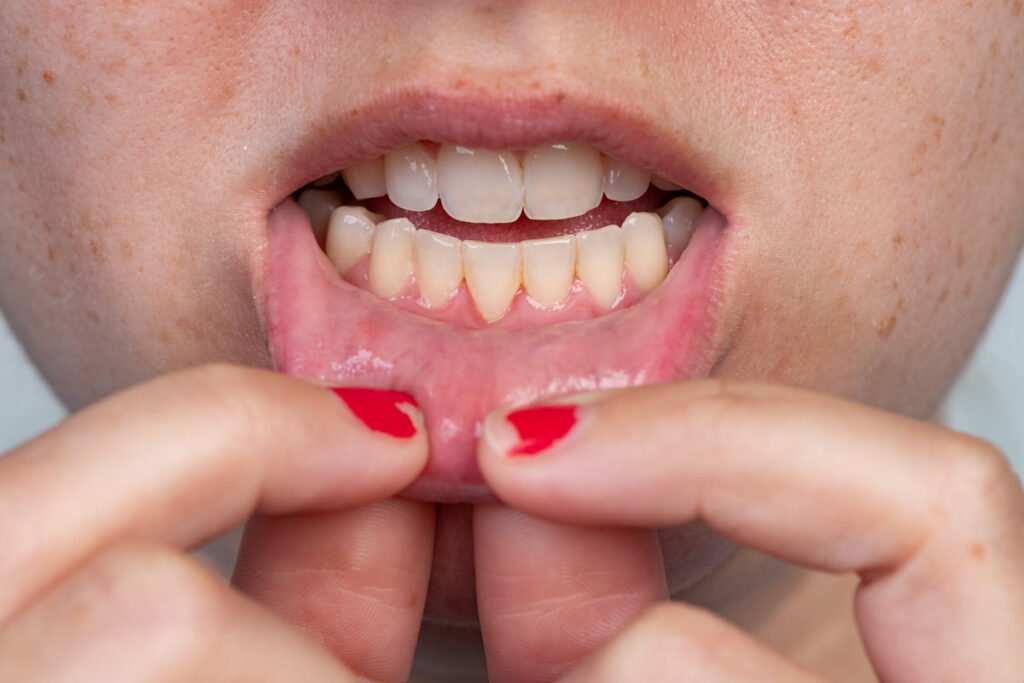
Every gum disease evaluation starts with a thorough periodontal exam. We measure the depth of the pockets between your gums and teeth, check for bleeding on probing, and evaluate any bone loss visible on digital X-rays. This gives us a clear picture of whether you are dealing with gingivitis or a more advanced stage of periodontitis, and it directly influences the treatment plan we recommend.
We also look at contributing factors like your oral hygiene routine, whether you smoke, and if you have diabetes, since these all influence how gum disease progresses and responds to treatment. Patients who have seen other dentists may find this deeper level of periodontal evaluation to be more thorough than what they have experienced before.
For many patients, gum disease can be managed without surgery. The most common first-line treatment is scaling and root planing, a deep cleaning procedure that removes plaque and tartar from below the gumline and smooths the tooth root to help gum tissue reattach. This is typically paired with a course of antimicrobial therapy to reduce the bacteria driving the infection.
We also emphasize the daily habits that support healing between visits, including proper brushing technique, daily flossing, and, for some patients, an antimicrobial rinse. These habits matter just as much as what happens in the dental chair, since gum disease is an ongoing condition that requires consistent maintenance rather than a single fix.

If periodontitis has progressed to the point where deep pockets or significant bone loss have developed, nonsurgical cleaning alone may not be enough. In these cases, we may recommend periodontal surgery to reduce pocket depth, regenerate lost bone and tissue, or address gum recession directly. We always guide you through exactly what a surgical procedure involves and what recovery looks like before moving forward, so there are no surprises.
For those who have already lost teeth to advanced gum disease, we also offer single tooth implants as a long-term restorative solution once the underlying infection is under control.
Treating gum disease is only half of the equation. Keeping it from coming back requires a maintenance plan tailored to your risk level. For most patients who have been treated for periodontitis, this means more frequent cleanings than the standard twice-yearly schedule, often every three to four months, so we can monitor pocket depth and catch any regression early.
We pair these maintenance visits with our routine dental cleanings and a dental checkup schedule built around your specific history, rather than a generic interval. Patients managing diabetes or other conditions that affect healing may need an even tighter recall schedule, which we will map out together based on how your gums respond to treatment.

At Smile Craft Dental, your checkup and cleaning is handled by a dedicated team who knows your history and takes the time to explain what they find.

Lead Dentist · Smile Craft Dental Sunnyvale
Dr. Chou leads Smile Craft Dental Sunnyvale with a focus on thorough, unhurried checkups and preventive care. She works alongside Dr. Brendon Nguyen to make sure every patient’s exam and cleaning is comprehensive, and that any findings are explained clearly before any treatment is recommended. Her approach is straightforward: listen carefully, explain everything in plain language, and never recommend care that isn’t the right fit.
See what patients say about their experience at Smile Craft Dental.
Gum disease never pops up loudly with a big and obvious announcement, which is exactly why regular evaluations matter so much. Whether you have noticed bleeding gums, persistent bad breath, or even nothing at all but it has been a long while since your last periodontal check, our Sunnyvale team is ready to give you a clear picture of where your gum health stands and what, if anything, needs to change without any judgment.
We know that walking in with questions about your treatment options is normal, and we would rather spend the extra time explaining your results than rush you through an appointment. To get started, contact our office, and we will find a time that works conveniently for your schedule.
Sunnyvale, CA
Serving the South Bay and surrounding communities
We use cookies to improve your experience on our site. By using our site, you consent to cookies.
Manage your cookie preferences below:
Essential cookies enable basic functions and are necessary for the proper function of the website.
CloudFlare provides web performance and security solutions, enhancing site speed and protecting against threats.
Service URL: developers.cloudflare.com (opens in a new window)
These cookies are needed for adding comments on this website.
Google reCAPTCHA helps protect websites from spam and abuse by verifying user interactions through challenges.
Google Tag Manager simplifies the management of marketing tags on your website without code changes.
Statistics cookies collect information anonymously. This information helps us understand how visitors use our website.
Google Analytics is a powerful tool that tracks and analyzes website traffic for informed marketing decisions.
Service URL: policies.google.com (opens in a new window)
Marketing cookies are used to follow visitors to websites. The intention is to show ads that are relevant and engaging to the individual user.
Google Maps is a web mapping service providing satellite imagery, real-time navigation, and location-based information.
Service URL: policies.google.com (opens in a new window)