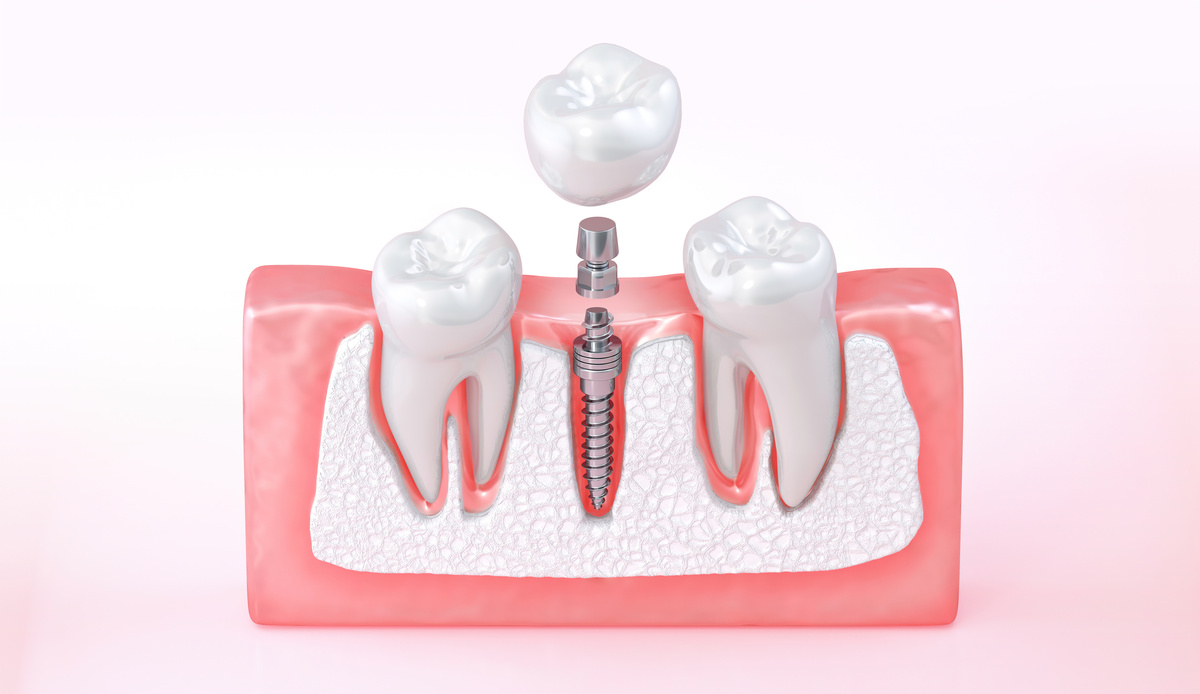
When you lose a tooth, the damage goes deeper than what you can see in the mirror. Beneath the surface, your jawbone begins to quietly shrink, losing the stimulation it once relied on from your tooth root to stay strong and dense. This process, known as bone resorption, can reshape your face, destabilize neighboring teeth, and make future tooth replacement far more complex.
At Smile Craft Dental, we believe replacing a missing tooth is about more than restoring your smile’s appearance. Our team at our Redwood City and Sunnyvale offices takes a comprehensive, long-term approach to tooth replacement, and dental implants remain one of the most effective tools we have for protecting not just your smile, but the foundation that supports it.
Why Does the Jawbone Deteriorate After Tooth Loss?
Your jawbone is living tissue, and like all living tissue, it responds to the demands placed on it. Every time you bite or chew, your tooth roots transmit pressure into the bone, signaling it to continuously regenerate and maintain its density. When a tooth is removed, those signals stop, and the bone begins to resorb. Research published in the National Institutes of Health’s PubMed Central found that within the first year after tooth loss, crestal bone width decreases by approximately 25%, with further resorption continuing in the years that follow.
This isn’t a slow or subtle process. Over time, a shrinking jawbone changes the contours of your face, causes remaining teeth to shift and become unstable, and makes it significantly harder to place an implant later, sometimes requiring bone grafting before treatment can begin. The longer you wait after losing a tooth, the more bone you stand to lose.
How Implants Mimic a Natural Tooth Root
The key to understanding why dental implants protect the jawbone lies in a process called osseointegration. When a titanium implant post is placed into the jawbone, the bone tissue gradually fuses with the implant surface, treating it much like a natural tooth root. This creates a stable, load-bearing structure that transmits chewing forces directly into the jaw, replicating the stimulation the bone needs to stay healthy and dense.
No other tooth replacement option provides this benefit. Traditional dentures and bridges sit above the gumline and do not interact with the bone below, which means bone resorption continues even after these restorations are in place. An implant, by contrast, actively engages with the bone and encourages ongoing remodeling, making it the only restorative solution that addresses bone loss at its root cause.
The Long-Term Advantages for Your Oral Health
Preserving bone density has consequences that extend well beyond the implant site itself. When the jawbone stays strong and full, it supports the natural positioning of your surrounding teeth, maintains the structural integrity of your face, and creates a stable platform for a long-lasting restoration. Patients who receive implants early after tooth loss are often able to avoid the more complex and costly treatment path of bone grafting that becomes necessary when significant resorption has already occurred.
If you have been curious about whether you are a good fit for this treatment, our blog on who is a candidate for dental implants walks through the key factors we evaluate. We also encourage you to explore why dental implants are comfortable and secure for a closer look at what makes this solution stand out from other options.
Comparing Your Tooth Replacement Options
Not every patient is immediately ready for implants, and we understand that circumstances differ. Our tooth replacement options resource provides a helpful overview of the different paths available, from implants to bridges to dentures, so you can weigh each option against your priorities and timeline. What sets implants apart, however, is that they are the only option designed to work with your biology rather than simply around it.
If bone loss has already progressed, all is not lost. We may recommend bone grafting as a preparatory step, a procedure we also offer at both our Redwood City and Sunnyvale offices, so you can still benefit from an implant-supported restoration when you are ready.
Schedule a Consultation at Smile Craft Dental
Dental implants are one of the most meaningful investments you can make in your long-term oral health, and the best time to explore them is before significant bone loss has the chance to occur. At Smile Craft Dental, Dr. Janice Chou and Dr. Brendon Nguyen bring advanced training, state-of-the-art technology, and a genuinely patient-centered approach to every implant consultation. Our beautiful offices in Redwood City and Sunnyvale are designed to make you feel at ease from the moment you walk in, and our highly rated team is here to answer every question at your own pace.
We welcome patients from across the Bay Area and accept most major insurance plans. To take the first step toward protecting your smile and your jawbone health, reach out to us today.